Early Maps of Yunnan
The history of maps in Yunnan began more than a thousand years ago. But it was the Jesuits who revolutionised mapping in China, producing the first accurate maps of the provinces, including remote Yunnan.
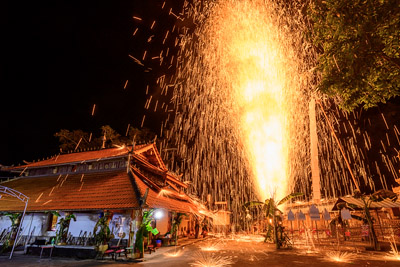
Hand-made giant sparklers, called "Fire Flowers" 火花, are part of the firework displays for temple fairs in Menglian county.
Jim Goodman: Children of the Jade Dragon: the Naxi of Lijiang and their mountain neighbours the Yi
In the first half of the 1990s Lijiang had barely made its appearance on the Chinese tourism stage, even less so the then remote mountains of Ningland and Lugu Lake. Jim Goodman's account of the Naxi and the Yi draws back to a time where not everything was staged for mass tourism: an account of a lost world.
A number of Chinese historic texts covering life and politics in Yunnan have survived over the centuries. I have translated a few of them.
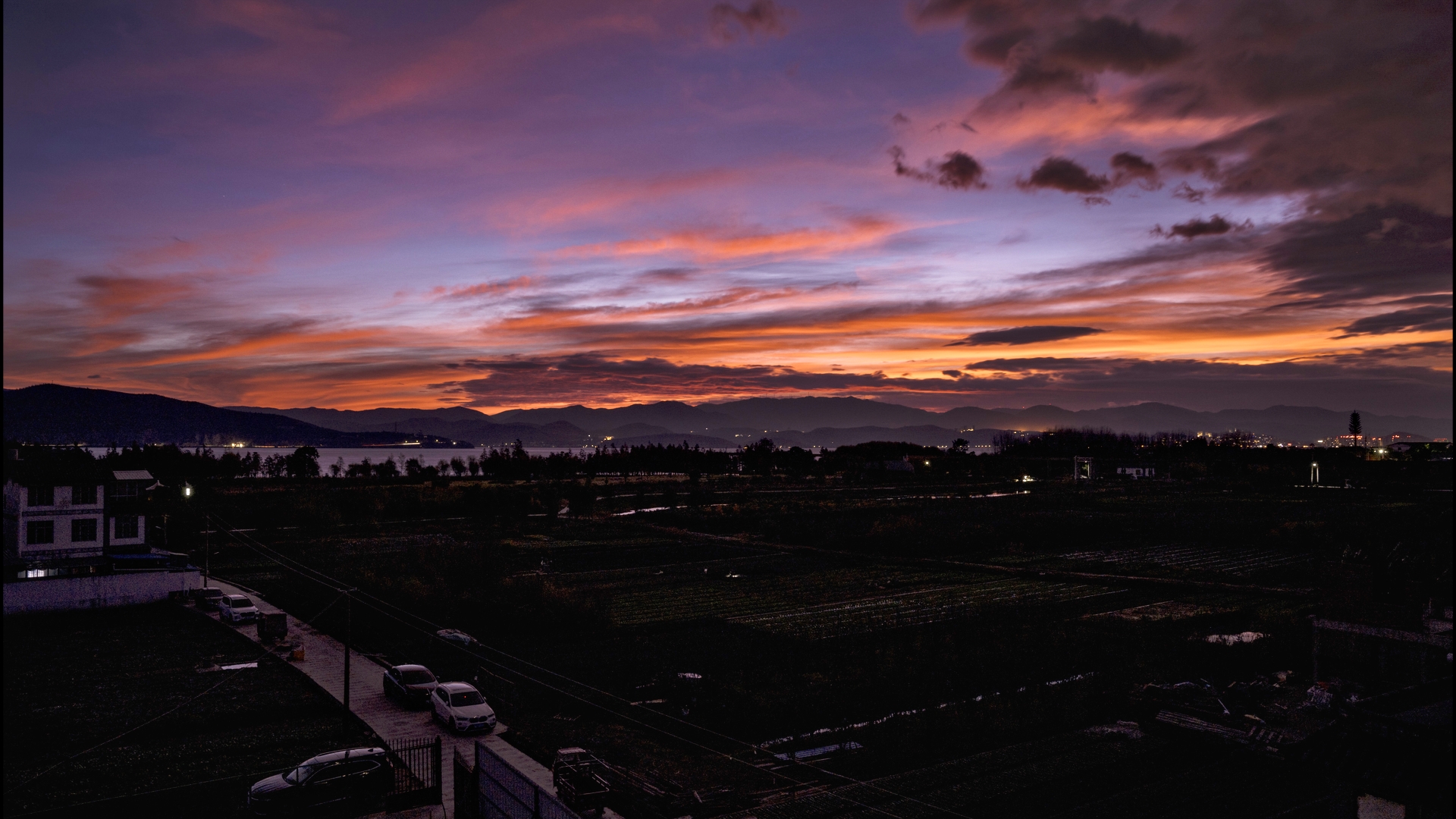

Tie-Dye is an Bai traditional technique with its centre in Zhoucheng 周城.

Once an important salt-mining town, now the second largest town along the Heihui River north of Yangbi.
John Israel: Lianda: A Chinese University in War and Revolution
Everyone knows about the Mao's Long March, but a few years later another long march took place: that of Chinese students leaving their cushy campuses on the east coast, trekking all the way to Yunnan where their universities reformed as Lianda, the united university. Kunming, then a total backwater, became a hotbed for new ideas, not just scientific. We liked the section of east coast girls scampering around Mengzi in their latest fashion.
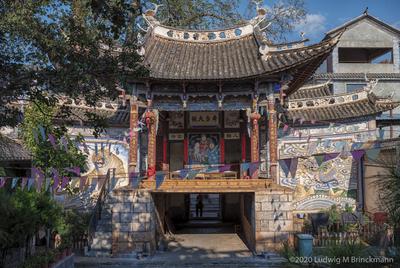
Extremely beautiful Wenchang Temple, created in part by national level Intangible Cultural Heritage transmitter Li Yunyi.
Upcoming Festivals
| Name | Date |
|---|---|
| Opening of the Fishing Season | 28 Oct |
| Guanyin Enlightenment | 28 Oct |
| Dharmic Assembly | 31 Oct |
| Benzhu Worship | 31 Oct |
| Pupeng Zhejume Pilgrimage | 31 Oct |
| Benzhu Worship | 01 Nov |
| Open Door Festival | 01 Nov |
| Anniversary of Yangbi County Foundation | 01 Nov |
| Benzhu Festival | 01 Nov |
| Temple Fair | 01 Nov |
| Dongshan Tuzhu Temple Fair | 02 Nov |
| Jingpo New Rice | 04 Nov |
Markets this Thursday
| Kunming | 昆明 |
|---|---|
| Tuanjie | 团结 |
| Dali | 大理 |
|---|---|
| Nanxin | 南新 |
| Yangcen | 羊岑 |
| Niujie | 牛街 |
| Shuixie | 水泄 |
| Maidi | 脉地 |
| Haidong | 海东 |
| Xintun | 辛屯 |
| Gudi | 古底 |
| Songgui | 松桂 |
| Yinqiao | 银桥 |
| Qiaohou | 乔后 |
| Daying | 大营 |
| Taiyi | 太邑彝族乡 |
| Huangping | 黄平镇 |
| Gonglang | 公郎镇 |
| 前所 | |
| 鲁庄 | |
| Qinghaiying | 青海营 |
| 太和社区 | |
| Midian | 米甸镇 |
| 西庄 | |
| 寅街村 | |
| 云南驿村 | |
| Qiaodian | 乔甸镇 |
| Lijiang | 丽江 |
|---|---|
| Shigu | 石鼓镇 |
| Xishuangbanna | 西双版纳 |
|---|---|
| Xiding | 西定哈尼族乡 |
| Honghe | 红河 |
|---|---|
| Dianwei | 甸尾乡 |
| Majie | 马街 |
| Heping | 和平乡 |
| Lvchun | 绿春县 |
| Nanke | 南科 |
| Xinjie | 新街 |
| Jinping | 金平苗族瑶族傣族自治县 |
| Baixian | 白显 |
| Baoxiu | 宝秀镇 |
| Shaochong | 哨冲镇 |
| Mengqiao | 勐桥乡 |
| Xincheng | 新城乡 |
| Wenshan | 文山 |
|---|---|
| Pingzhai | 平寨乡 |
| Banlun | 板仑乡 |
| Banggu | 蚌谷乡 |
| Muyang | 木央镇 |
| Nanping (Majie) | 南屏镇 (马街) |